
Pietra dura is the art of inlaying cut, coloured, semi-precious stones into marble so the surface stays perfectly smooth and the design sits in the stone rather than on top of it. Most people meet it without knowing its name, on the walls of the Taj Mahal. This is the story of where the craft came from, the ruler who brought it to India, how it reached its peak on the Taj, and how it survived four centuries to still be made by hand today. For a full explanation of what pietra dura is and the stones it uses, see our guide to pietra dura; here we follow its history.
What is pietra dura, briefly?
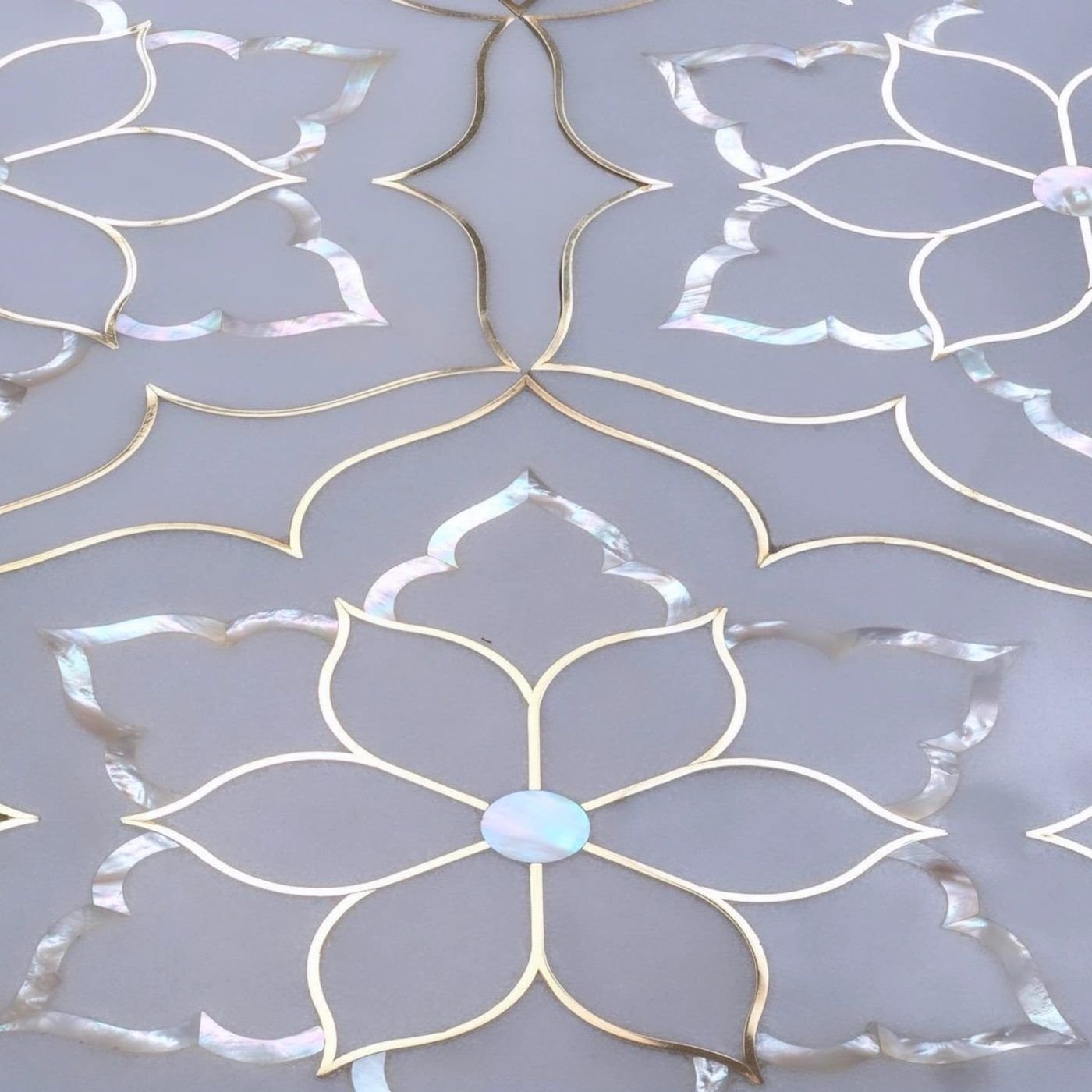
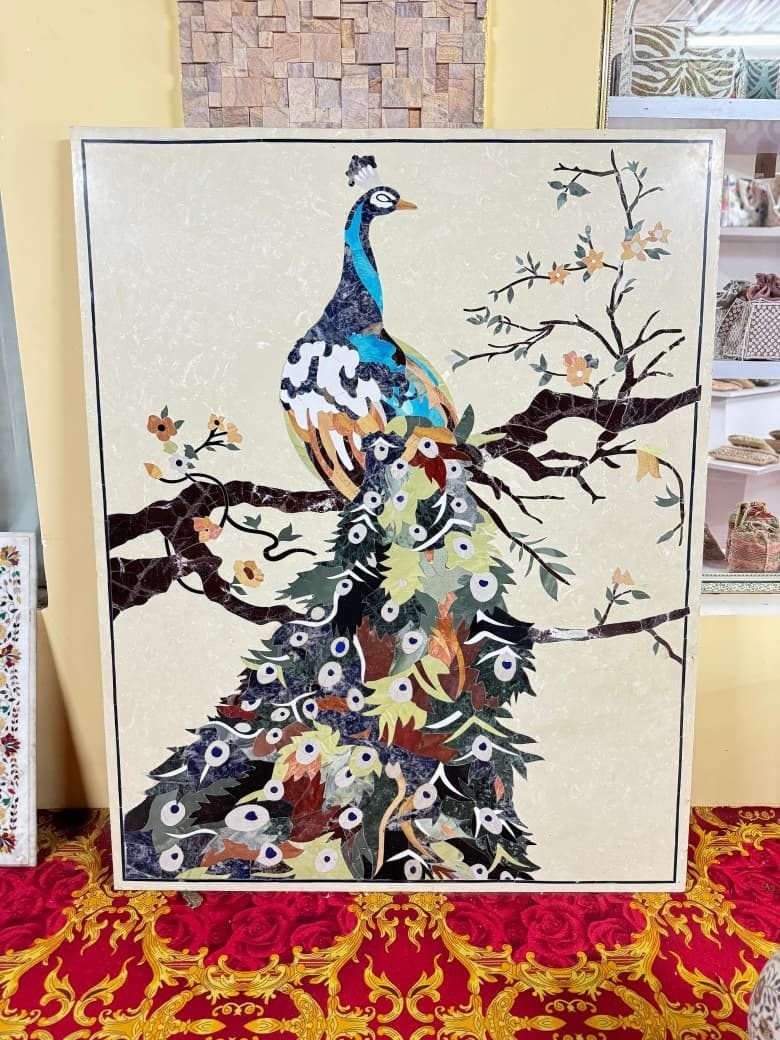
Pietra dura is Italian for “hard stone.” In India the same craft is called parchin kari. Precisely cut pieces of lapis lazuli, malachite, carnelian, jasper, agate, and mother-of-pearl are set into a marble base to form flowers, vines, and patterns, with joins so fine they are almost invisible. It is not mosaic: each stone is shaped to its exact place and fitted flush, so the finished surface is one smooth plane.
Origins: from Florence to the Mughal court
The refined form of the craft developed in Renaissance Florence, where grand-ducal workshops produced commesso di pietre dure, pictures built from hard stone, from the late 16th century. Trade and diplomacy carried examples and ideas east. When the technique reached the Mughal court in northern India, local artisans fused it with existing traditions of stone working and Persian floral design, and parchin kari was born, an Indian craft in its own right rather than a copy.
Which ruler brought pietra dura to India?
Pietra dura in India is most closely associated with the emperor Shah Jahan, who reigned from 1628 to 1658 and under whom the craft reached its height. Some inlay appears a little earlier, under his father Jahangir, but it was Shah Jahan's building programme, above all the Taj Mahal, that turned marble inlay into the signature decoration of Mughal architecture. If you have ever seen the exam question “pietra dura was introduced by which ruler,” Shah Jahan is the answer usually expected.

Pietra dura in the Taj Mahal
The Taj Mahal, completed around 1653 at Agra, is the most famous pietra dura in the world. Its white Makrana marble is inlaid with thousands of pieces of semi-precious stone forming trailing flowers, vines, and arabesques, and framing the inlaid calligraphy around the arches. The finest work is on the cenotaphs and the marble screen at the centre, where flowers are built from dozens of graded stones each. The same white marble and the same craft we use today are a direct inheritance of this work.
Beyond the Taj: pietra dura in Mughal architecture
The Taj is the masterpiece, but it is not alone. Pietra dura appears across Mughal architecture: in the marble palaces of the Agra Fort, in the Red Fort in Delhi, and in tombs and pavilions of the period. It became the mark of imperial luxury, reserved for the most important surfaces, and its floral vocabulary spread into textiles, painting, and later decorative arts.
How the old masters worked
The technique has barely changed in four hundred years. The design is drawn to full scale and transferred onto the marble; the outline is chiselled into shallow grooves; each stone is ground by hand on a wheel to fit its groove exactly; the pieces are set and cemented; and the whole surface is polished until it is level and shines like glass. It is slow, exacting work, which is why fine pietra dura has always been costly. Our craft guide shows the steps in more detail.
How the craft survived
When Mughal patronage faded, the workshops did not simply disappear. The knowledge passed down through the artisan families who had served the court, particularly around Agra, where inlay work continued for the pilgrim and, later, tourist trade. Over generations the craft also took root in Rajasthan, carried by families who settled in centres such as Udaipur. It is this unbroken chain of hand-taught skill, parent to child, that keeps genuine parchin kari alive rather than any factory revival.
Pietra dura today
Today the same craft is made by hand for homes and projects around the world: table tops, wall panels, flooring, and bespoke pieces, in the same white Makrana marble and the same semi-precious stones as the Taj. We are a marble inlay studio in Udaipur, and our artisans work in the tradition described here. To read how a piece is made, see our pietra dura guide, or commission a piece of the living craft.
Frequently asked questions
Who introduced pietra dura to India?
Pietra dura is generally credited to the Mughal emperor Shah Jahan, who brought the technique to its height in the early 17th century, most famously on the Taj Mahal. Some inlay work appears a little earlier under Jahangir, but Shah Jahan's reign is when it flourished.
What is pietra dura called in India?
In India the craft is called parchin kari (also spelt pacchikari), which means driven-in or inlaid work. It is the same technique as Italian pietra dura and is often called simply marble inlay or stone inlay.
Is the Taj Mahal decorated with pietra dura?
Yes. The Taj Mahal's white marble is inlaid with thousands of pieces of semi-precious stone, lapis lazuli, carnelian, jasper, and more, forming flowers and vines and framing the calligraphy. It is the most famous pietra dura in the world.
Where was pietra dura first used in India?
It first flourished in the Mughal court in the early 1600s and is seen at Agra, in the Taj Mahal and the Agra Fort, and at other Mughal sites such as the Red Fort in Delhi. Artisan families later carried the craft to Rajasthan.
Is pietra dura still made today?
Yes. The craft survived through artisan families descended from the original workshops, and it is still practised by hand in Agra and in Rajasthan, including our studio in Udaipur, using the same tools and stones.
What is the difference between pietra dura and mosaic?
Mosaic builds an image from many small, similar tiles with visible grout; pietra dura cuts each stone to the exact shape of the petal or leaf it represents and sets it flush with no grout, so it reads like a painting in stone.
Bring your idea to life.
Tell us your space, design, and size. We will plan it with you and make it by hand.
Enquire now