
A marble floor is one of the few surfaces in a home that can be a work of art in its own right. The right marble floor design turns a plain hall or entrance into the centrepiece of the room, and because the pattern is cut from solid stone rather than printed on a tile, it keeps its colour and depth for generations. This guide walks through the main families of marble floor design, ideas by room, colour combinations, and how hand inlay lifts a floor from simple to spectacular.
Marble floor design basics
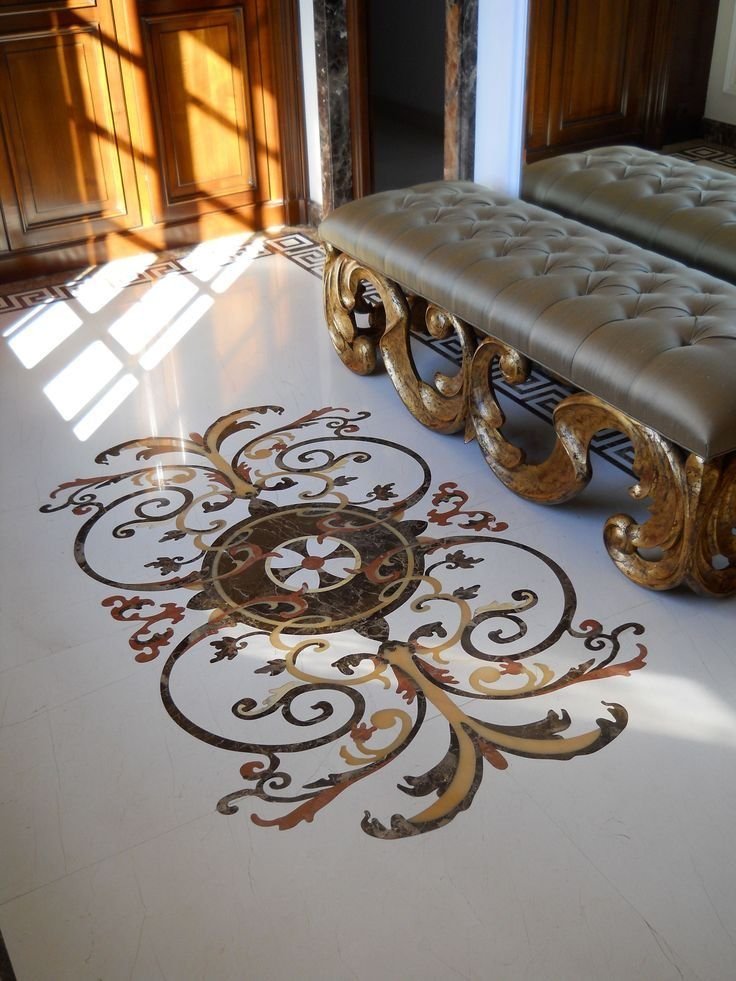
Most marble floors are built from a plain marble field and one or more decorative elements set into or laid over it. The field is usually a single colour, most often white Makrana marble, laid in large slabs or tiles. The decoration is where the design lives: a central motif, a running border, or a repeating pattern across the whole floor. At the top end, the decoration is hand inlay (pietra dura) in which coloured semi-precious stones are cut to shape and set flush into the marble, the same craft seen on the Taj Mahal.
Popular marble floor design families
Nearly every marble floor design is a variation on three families, and the most striking floors combine them:
Floor medallions
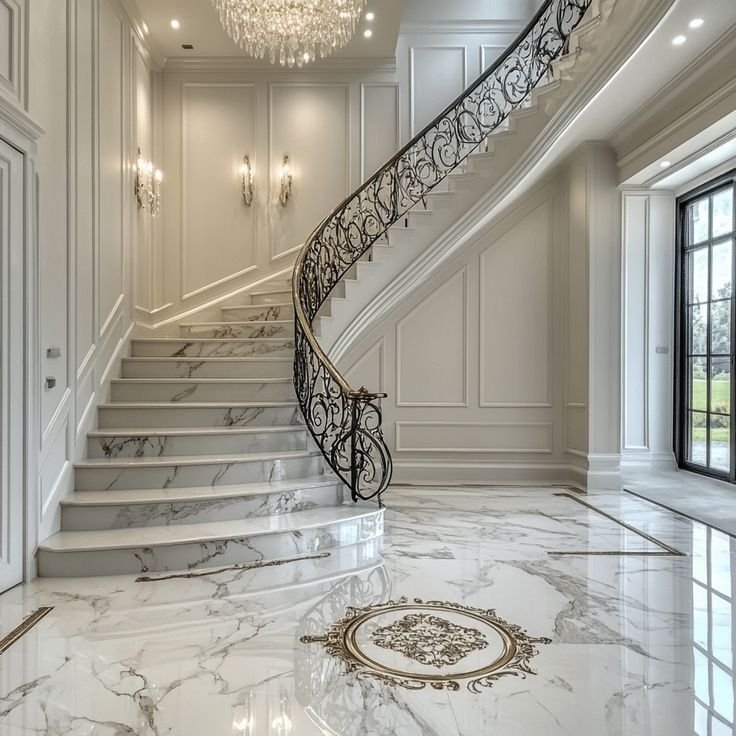
A marble floor medallion is a single ornamental motif, floral, geometric, or a compass rosette, placed at the centre of an entrance, foyer, or under a chandelier. It is the most popular starting point because it creates a focal point without inlaying the whole floor, which keeps the cost sensible while still making a statement. Medallions range from a simple circular star in two colours of marble to a dense floral wheel in a dozen semi-precious stones.
Border designs
A marble floor border design runs a band of pattern around the edge of a room, around a central medallion, or as a runner down a corridor. Borders are the most versatile marble floor design: a simple black-marble band frames a white floor cleanly and cheaply, while an inlaid vine or Greek-key border adds richness. Modern marble floor border designs often pair a wide plain band with a thin inlaid line, which reads as contemporary rather than ornate.
Full-floor patterns and mandalas
Repeating geometry, Mughal floral fields, chequerboards, and mandala compositions cover the whole floor. These suit grand foyers, hotel and office receptions, banquet halls, and temples, where the scale of the space can carry an all-over pattern. A full inlaid floor is the most expensive option, so many projects use a large central mandala with a plainer surrounding field to balance impact and budget.

Marble floor designs by room
The right design depends on where the floor goes:
- Entrance and foyer — a single medallion or a compass rosette makes a strong first impression and is the classic use of inlay.
- Living and dining hall — a central motif under the seating or table, often with a border tracing the room, is the most popular hall floor marble design.
- Pooja room or temple — a lotus or mandala motif suits a marble mandir and the space around it.
- Bedroom — a soft floral corner or a subtle border keeps the room calm rather than busy.
- Commercial lobbies and restaurants — a large logo medallion or an all-over geometric pattern carries a big, open floor.
Colour combinations
The base is usually white Makrana marble for its bright, even tone. Against it, the most popular combinations are black and white (crisp and timeless), white with brass line inlay (warm and modern), and white with multi-coloured semi-precious stones such as lapis blue, malachite green, and carnelian red for a full Mughal palette. Black marble as the base, with white or stone inlay, gives a dramatic, contemporary reverse of the classic look.
Plain marble design vs marble inlay
A plain marble floor gets its design from how slabs and simple bands are laid; a marble inlay floor gets its design from stones cut and set into the surface. The difference is depth: inlay lets a floor carry flowers, vines, medallions, and figurative motifs that plain laying cannot, and because the colour is natural stone it never fades. If you want a floor that looks like a painting in stone rather than a tiled pattern, inlay is what you are looking at. For how an inlaid floor is actually built and installed, see our marble inlay flooring guide.
How much does a marble floor design cost?
Plain marble flooring is usually priced per square foot for the marble plus laying and polishing. Hand-inlaid designs are quoted per project, because a bordered medallion floor involves a fraction of the hand-work of a fully inlaid floral field. As a rough guide, small inlaid pieces start from around ₹2,000, and inlay work is what drives the figure, not the floor area alone. For current market ranges and what moves the price, see our marble inlay cost guide.
How to choose a marble floor design for your home
Start with the room and the focal point: decide where the eye should land, and put the strongest element there. Match the scale to the space, a single medallion for one focal point, borders and patterns for larger open floors. Keep the palette tied to the room around it, and choose a honed, matte finish for wet or high-traffic areas and a mirror polish where you want shine. When you are ready, send a floor plan and a design idea and we will draw it to scale before any stone is cut. We make marble floors to order in Udaipur and deliver across India, from Udaipur and Jaipur to Mumbai and beyond. See our marble flooring service or tell us your idea.
Frequently asked questions
Which is better for the floor, marble or tiles?
Marble is natural stone, so it lasts for generations, stays cool underfoot, and can be repolished; tiles are cheaper and easier to lay but cannot match the depth of real stone or carry hand inlay. For a floor you want to be a centrepiece, marble is the stronger choice.
What is the most popular marble floor design?
A central floor medallion in white Makrana marble is the most requested design, usually placed in an entrance or under a chandelier, often with a matching border around the room.
Which marble is best for flooring?
White Makrana is the classic Indian choice and the marble used in the Taj Mahal; Italian marbles are chosen for specific tones. The base marble is picked to suit your design and the stones inlaid into it.
How do I clean a marble floor?
Wipe with a soft, damp mop and a pH-neutral cleaner, deal with spills quickly, and avoid acidic or harsh chemicals. Reseal occasionally. See our care guide for stains and polishing.
How much does a marble inlay floor cost?
Plain marble flooring is priced per square foot, while hand-inlaid designs are quoted per project based on the inlay density, stones, and size. Our cost guide gives current market ranges.
Can you make a marble floor design to match my interior?
Yes. Every floor is made to order, so the motif, colours, stones, and scale are drawn to fit your space before any stone is cut.
Bring your idea to life.
Tell us your space, design, and size. We will plan it with you and make it by hand.
Enquire now